
1. Clears chemical fumes fast – Hair color, ammonia, acetone, nail products, and bleaching agents release strong VOCs. Continuous fresh air exchange removes these fumes before they build up to irritating or harmful levels for staff and clients.
2. Controls humidity from steam and water services – Steam rooms, facial steamers, hot towels, and wash stations push humidity up constantly. Proper ventilation prevents mold on walls/ceilings, peeling paint, and musty smells in treatment rooms.
3. Removes odors that affect first impressions – Nail polish remover, hair chemicals, and massage oils create distinct smells that linger. Fresh air turnover keeps the space smelling neutral or pleasantly scented – critical for a “relaxation” brand experience.
4. Protects staff from prolonged chemical exposure – Stylists, nail technicians, and therapists are exposed to these fumes for 8+ hours daily, far more than clients. This is an occupational health issue, not just comfort – ventilation reduces long-term respiratory risk.
5. Reduces client discomfort and allergic reactions – Strong fumes can trigger headaches, nausea, or allergic responses in sensitive clients during treatments. Fresh air dilution makes the experience safer and more comfortable, especially in small private rooms.
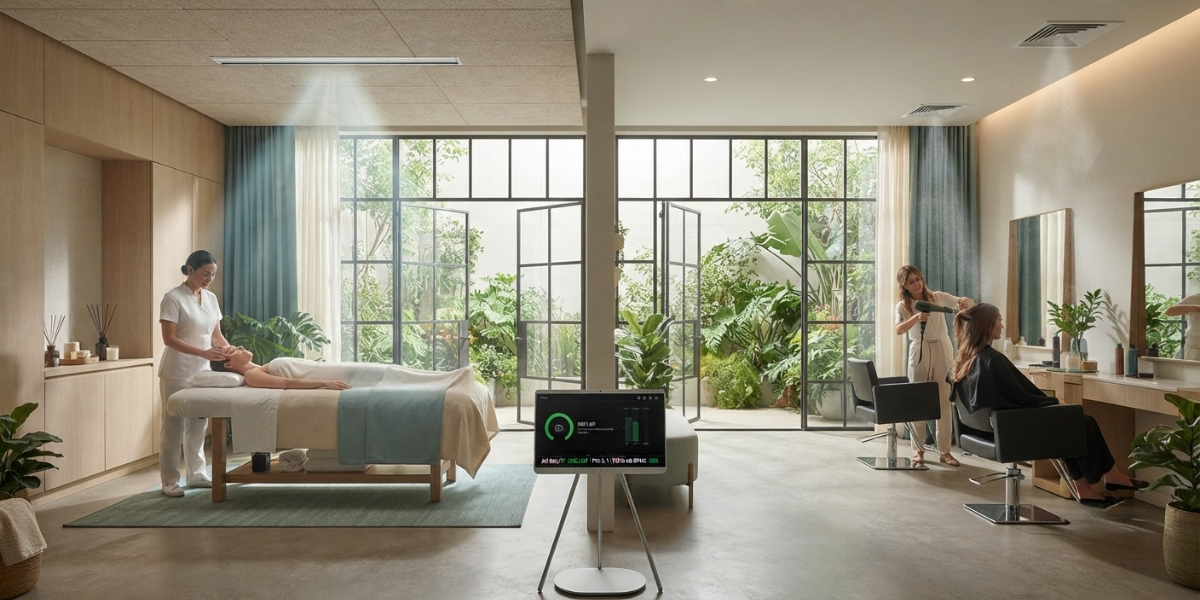
6. Prevents cross-contamination of smells between rooms – Without proper airflow management, nail salon smell drifts into the massage room next door. Zoned fresh air ventilation keeps each service area’s air quality independent.
7. Supports premium/luxury positioning – High-end spas differentiate on sensory experience – air quality is part of that, alongside lighting and music. A spa that smells “clean and fresh” vs. “chemically heavy” directly affects perceived luxury and repeat visits.
8. Energy-efficient with heat/energy recovery (ERV) – Spas run AC almost continuously for client comfort. ERV-based fresh air systems recover most of that conditioning energy from exhaust air, so you’re not paying double for fresh air and cooling.
9. Helps meet salon/spa licensing and safety norms – Many municipal and trade body guidelines now reference minimum ventilation standards for nail and chemical-use areas. A designed FAS keeps you compliant and inspection-ready.
10. Improves staff retention – Salon and spa staff turnover is often linked to working conditions, including poor air quality in small, enclosed treatment rooms. Visibly better air is a low-cost, high-impact retention lever for owners.
Conclusion: For spa/salon owners, what matters most is ‘client experience + staff retention’. Nail technicians and stylists are hard to retain in this industry. Fresh air ventilation systems ensure better staff retention and positive reviews by clients.