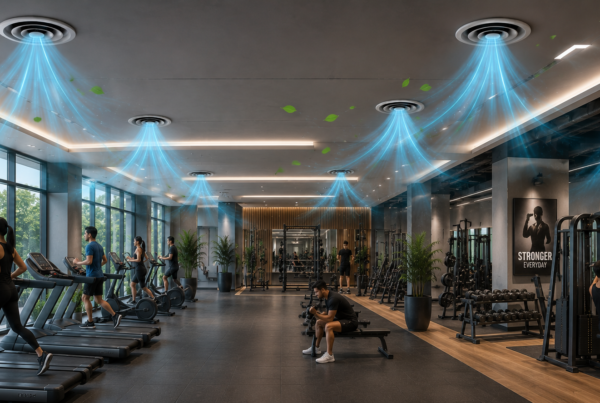

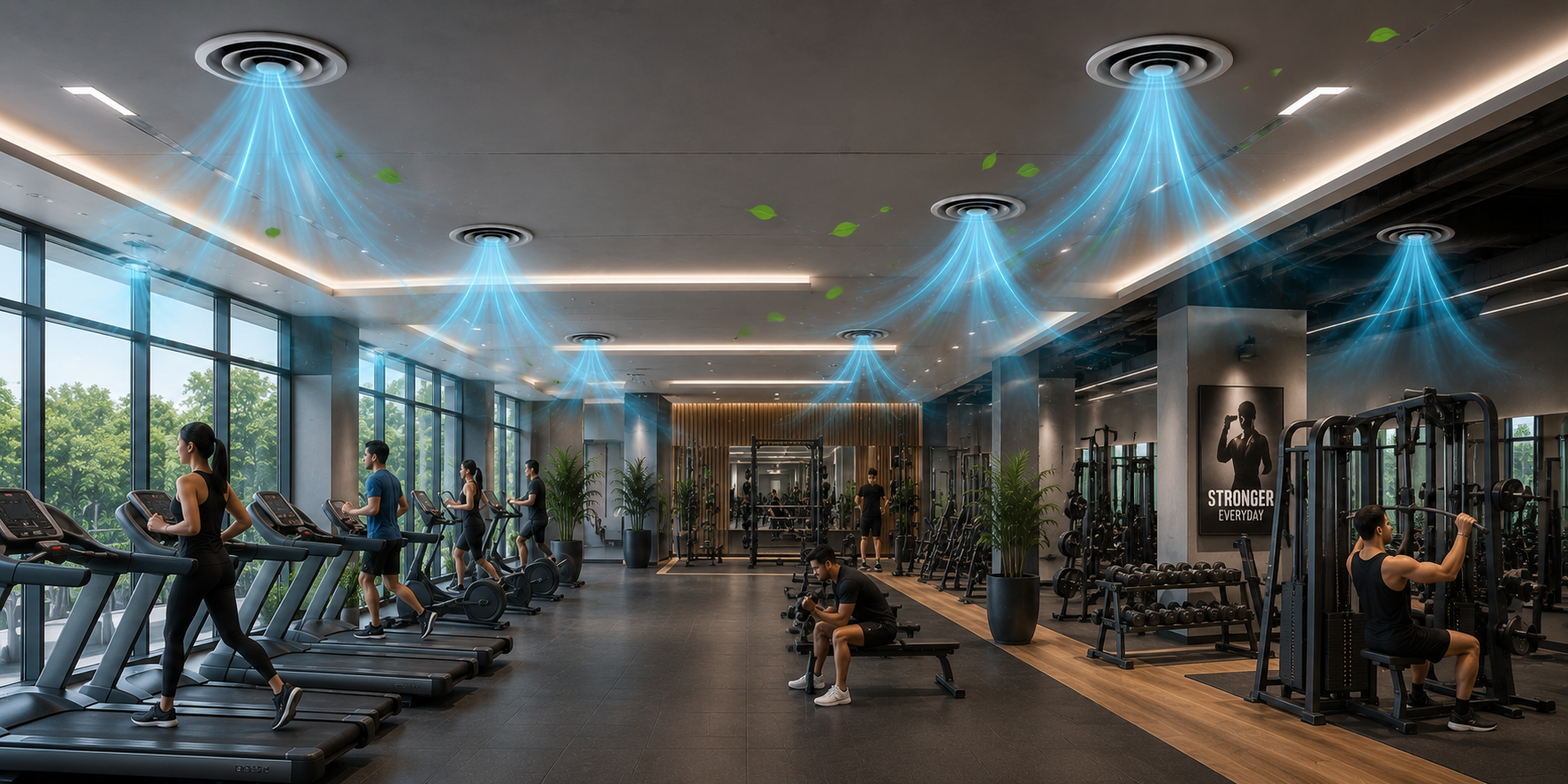
Gyms pack heavy breathing, sweat, and heat into a closed space — and most owners never measure what’s actually building up in that air. Here are 10 concrete, business-relevant reasons fresh air ventilation isn’t optional anymore.
1. Cuts CO₂ buildup that kills performance
A packed class can push indoor CO₂ past 2,000-3,000 ppm within an hour. Above 1,000 ppm, members feel foggy, fatigued, and short of breath — they cut workouts short and don’t come back as often.
2. Removes sweat-driven humidity and odor
Ventilation continuously exhausts moisture-laden air instead of recirculating it. Less humidity means less of that “locker room smell” clients associate with low-quality gyms.
3. Reduces mold and mildew risk in equipment areas
Mats, padded benches, and carpeted zones trap moisture. Stale, humid air accelerates mold growth — fresh air exchange keeps RH in a safe range (40-60%) and protects equipment investment.
4. Improves member retention and reviews
“Air felt heavy/smelly” is a recurring theme in negative gym reviews. Fresh, breathable air becomes a tangible point of differentiation members notice — even if they can’t name why a gym “feels better.”
5. Supports better workout intensity and recovery
Lower CO₂ and higher oxygen availability directly support aerobic performance. Members can push harder and recover faster in well-ventilated spaces — a real, measurable training benefit.
6. Dilutes airborne pathogens and reduces illness spread
Gyms are high-contact, high-exhalation environments. Continuous fresh air exchange dilutes viral/bacterial load far more effectively than just running an AC or fan (which only recirculates the same air).
7. Controls VOCs from rubber flooring, equipment, and cleaning chemicals
New equipment, rubber mats, and disinfectants off-gas VOCs continuously. Ventilation flushes these out instead of letting them accumulate in a closed, low-ceiling space.
8. Lowers energy cost
A heat/energy recovery ventilator (ERV) pre-conditions incoming fresh air using outgoing exhaust air — delivering fresh air without the full cooling/heating load penalty a plain exhaust fan + AC setup would cause.
9. Helps meet emerging IAQ compliance and certification expectations
Wellness-focused chains and franchise audits increasingly check CO₂/IAQ benchmarks (ASHRAE 62.1 ventilation rates). Having a documented fresh air system is becoming a checklist item for premium gym branding and franchise approvals.
10. Protects HVAC and structural assets long-term
Excess humidity and VOC buildup corrode ductwork, damage AC coils faster, and degrade ceiling/wall finishes. Proper fresh air exchange extends the life of both HVAC equipment and the building fit-out.
Practical takeaway for gym owners: A standalone exhaust fan removes air — it doesn’t replace it intelligently. An ERV/fresh air system brings in tempered, filtered outdoor air continuously, matched to occupancy, without spiking your electricity bill. For a typical gym floor, this is usually a one-time investment that pays back in retention and reduced AC strain within 2-3 years.