
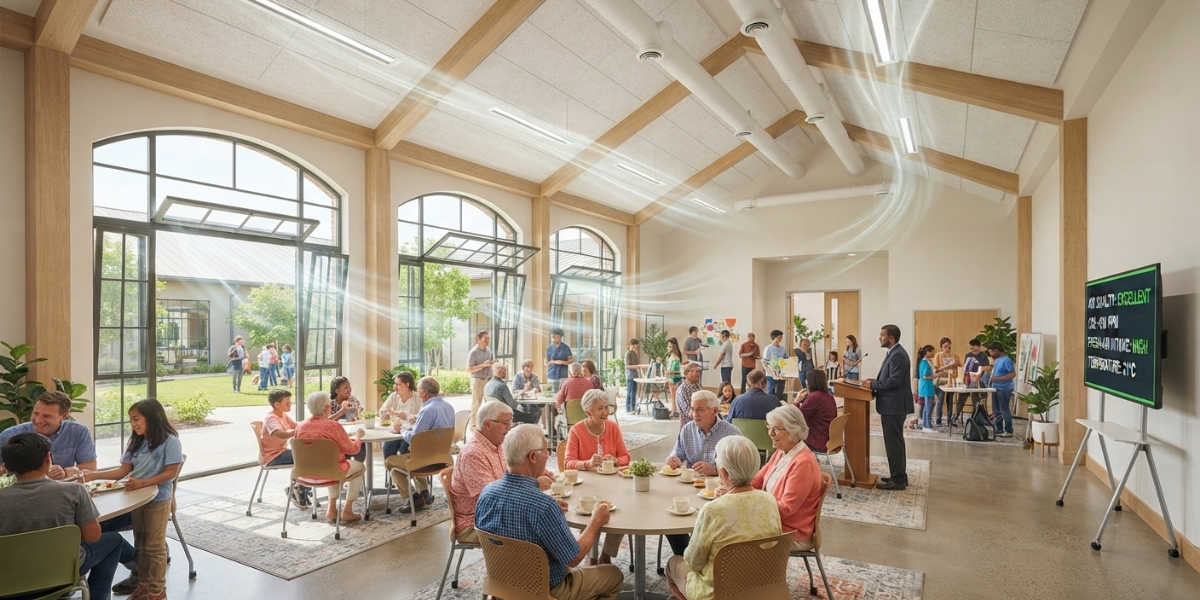
1. Handles sudden, extreme occupancy spikes – Festivals, kirtans , and large gatherings can pack a hall to 5-10x its everyday occupancy in hours. Fresh air systems are designed to scale air exchange to these peak loads, not just average daily use.
2. Controls CO₂ during long ceremonies and services – Prayers, sermons, and ceremonies often run 1-3+ hours with everyone seated in one space. Elevated CO₂ causes drowsiness and discomfort — exactly when attention and devotion matter most.
3. Removes smoke from incense, diyas, and havan/yagna fires – Religious halls regularly use incense sticks, oil lamps, candles, and ritual fires that release particulate matter and smoke. Continuous fresh air exchange clears this faster than natural ventilation alone.
4. Reduces airborne illness spread in mixed-age crowds – Community halls bring together elderly attendees, children, and everyone in between — a population with wide-ranging immunity levels. Fresh air dilution lowers transmission risk in these high-density, mixed-age gatherings.
5. Eliminates lingering food odors from community kitchens (langar/prasad halls) – Many religious halls have attached kitchens serving large groups. Odors from cooking can drift into prayer and seating areas without proper air management and zoning.
6. Manages humidity from large seated crowds – Hundreds of people seated together generate significant moisture through breathing, especially in summer. Unmanaged humidity leads to musty smells, damp carpets, and mold in fabric-heavy halls (curtains, floor seating, idol/altar areas).
7. Protects heritage structures, idols, and artwork – Many religious buildings house old murals, wooden carvings, idols, or historic interiors. Poor air quality and humidity accelerate deterioration of these irreplaceable elements over years.
8. Energy-efficient even with intermittent, high-occupancy use – Halls aren’t occupied 24/7, but when they are, occupancy is extreme. ERV-based systems recover conditioning energy from exhaust air, making it economical to ventilate well during peak events without normal-day energy waste.
9. Supports compliance for public assembly spaces – Halls hosting large public gatherings increasingly fall under fire and building safety codes requiring minimum ventilation standards for assembly occupancy. A designed FAS keeps trustees and management compliant.
10. Reflects care and respect for devotees and visitors – A fresh, well-ventilated hall signals that trustees and management care about the comfort and wellbeing of everyone who visits – directly shaping how the community experiences and speaks about the space.
Bottom line for trustees/management committees: Religious and community halls are judged by the experience they offer during the moments that matter most — festivals, kirtans, ceremonies, gatherings. Fresh air ventilation is one of the few upgrades that’s invisible on a normal day but unmistakably felt — and appreciated — during the very events the hall exists for.