
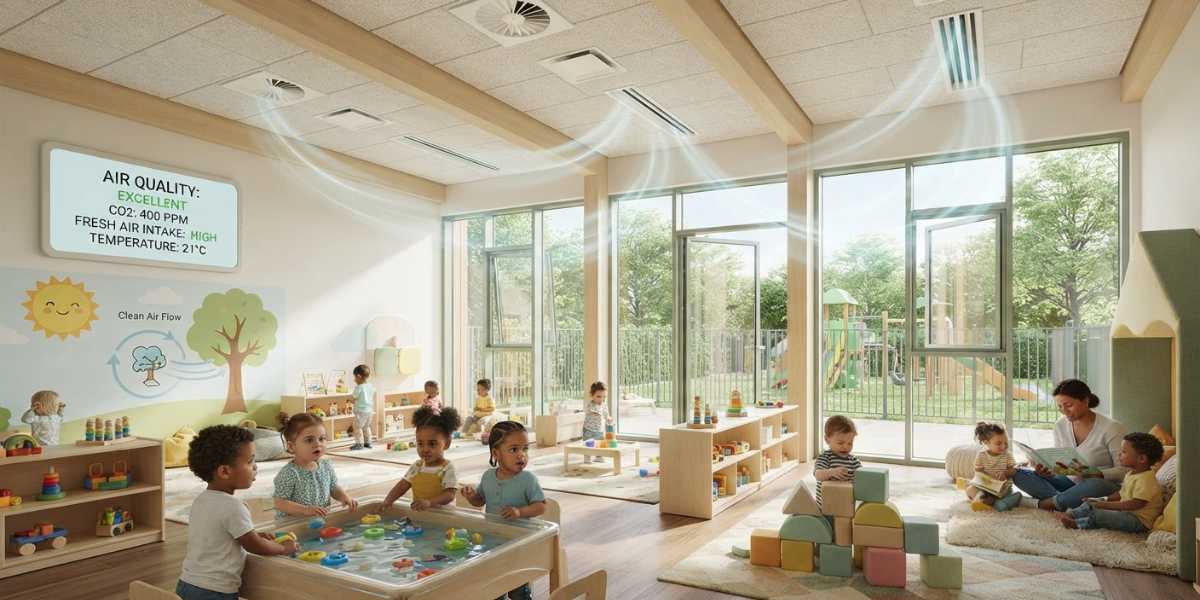
1. Protects developing lungs – Children’s respiratory systems are still developing and more vulnerable to airborne pollutants than adults’. Continuous fresh air exchange reduces their exposure to dust, allergens, and indoor pollutants during critical growth years.
2. Reduces CO₂ build-up in small, crowded rooms – Preschool classrooms pack many children into compact spaces. Elevated CO₂ has been linked to reduced concentration and alertness – a real concern during learning hours.
3. Lowers spread of common childhood illnesses – Daycares are notorious for fast-spreading colds, flu, and stomach bugs due to close contact and enclosed air. Fresh air dilution is one of the simplest, most effective ways to cut airborne transmission between kids.
4. Controls odors from diapering & nap areas – Diaper-changing stations, nap rooms, and shared washrooms generate persistent odors in a compact facility. Proper ventilation keeps the overall environment fresh for both children and visiting parents.
5. Manages humidity from handwashing & cleaning routines – Frequent handwashing, spills, and sanitizing create localized moisture. Unmanaged humidity encourages mold growth in a space where kids spend 8+ hours daily.
6. Removes cleaning chemical fumes – Daycares sanitize surfaces and toys constantly (often multiple times a day). Fresh air exchange clears disinfectant fumes quickly, rather than letting them linger in occupied rooms.
7. Builds parent trust and differentiates premium centers – Parents increasingly ask about air quality, sanitation, and safety protocols when choosing a daycare. A visible, explainable fresh air system is a strong trust signal in admission conversations.
8. Reduces staff fatigue and sick days – Teachers and caregivers spend full days in these same enclosed spaces. Better air quality reduces headaches, fatigue, and illness among staff — directly affecting consistency of care.
9. Supports compliance with childcare facility norms – Many regional childcare licensing and building safety guidelines are tightening around minimum ventilation standards for facilities with high child density. A designed FAS keeps centers audit and renewal-ready.
10. Energy-efficient with heat/energy recovery (ERV) – Daycares run HVAC most of the day for comfort. ERV-based systems recover the majority of that conditioning energy from exhaust air, delivering fresh air without significantly higher utility costs.
Bottom line for daycare/preschool owners: Parents are paying for safety and care, not just curriculum. Fresh air ventilation is one of the few infrastructure investments that’s both invisible day-to-day and a powerful, tangible answer the moment a parent asks “how do you keep the kids safe and healthy here?”