
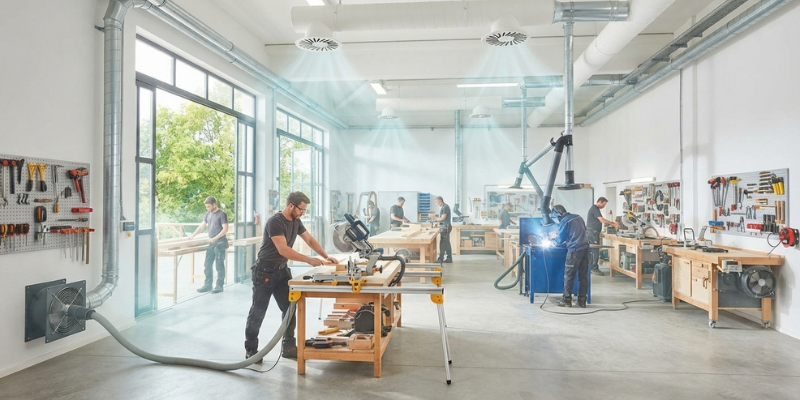
1. Removes airborne contaminants – Welding fumes, wood dust, paint VOCs, and machining particulates get continuously flushed out instead of recirculating. This directly cuts respiratory exposure for workers.
2. Prevents CO₂ and fume buildup – Closed workshops with combustion equipment (forklifts, generators, brazing torches) can hit dangerous CO/CO₂ levels fast. Mechanical fresh air exchange keeps concentrations within safe limits.
3. Reduces sick days and fatigue – Stale, oxygen-poor air causes headaches, drowsiness, and reduced concentration. Better air = fewer errors, fewer accidents and fewer absences.
4. Controls humidity and condensation – Workshops with metalworking, paint booths, or washing bays generate moisture. Proper ventilation prevents rusting tools/machinery, mold, and slippery condensation on floors.
5. Extends equipment and tool life – Corrosive fumes and humidity degrade machinery, electrical panels, and metal stock over time. Fresh air dilution slows this corrosion significantly.
6. Improves compliance with safety norms – Many factory/workshop safety codes (OSHA-equivalent, factory inspectorate norms) mandate minimum air changes per hour (ACH). A proper system keeps you audit-ready.
7. Eliminates odor accumulation – Solvents, grease, rubber, and chemical odors settle into stagnant air. Continuous fresh air exchange keeps the space usable and less unpleasant for workers and visitors.
8. Energy-efficient with heat/energy recovery (ERV) – Unlike simple exhaust fans that waste conditioned air, an ERV-based fresh air system recovers up to 70-90% of heating/cooling energy from outgoing air — so you get fresh air without the full HVAC energy penalty.
9. Better fire and explosion safety – In workshops handling flammable solvents, thinners, or fine combustible dust (wood, metal), maintaining airflow prevents dangerous vapor/dust concentration buildup — a key passive fire-risk mitigation.
10. Higher productivity and worker retention – Workers perform better and stay longer in spaces that don’t feel suffocating, smelly, or unsafe. It’s a tangible, visible signal that management cares about working conditions.
Conclusion: A workshop without engineered fresh air ventilation isn’t just uncomfortable — it’s a compounding liability (health claims, equipment corrosion, compliance risk, fire risk) hiding behind a relatively small one-time investment. The system is essential for risk mitigation + productivity gain, not just “comfort” or pure air.