
Indoor Air Quality : Causes, Risks & Modern Ventilation Solutions
Most people in India believe that staying indoors protects them from pollution.
But here’s the uncomfortable truth — indoor air can often be 2–5 times more polluted than outdoor air.
And unlike outdoor pollution, you don’t see it, smell it, or think about it. It quietly builds up inside your home, affecting your health every single day.
If you’ve ever felt unexplained fatigue, allergies, or constant dust buildup despite cleaning — your indoor air quality might be the real issue.
Let’s break down what’s causing it and what actually works to fix it.
What Is Indoor Air Quality (IAQ)?
Indoor Air Quality (IAQ) refers to the condition of air inside your home — specifically how clean, fresh, and healthy it is to breathe.
Good IAQ means:
- Low dust and particulate matter
- Proper oxygen flow
- Balanced humidity
- Minimal pollutants
Poor IAQ, on the other hand, leads to discomfort, health issues, and a home that never truly feels “clean.”
Why Indoor Air Quality Is a Bigger Problem in Indian Homes
1. Sealed Homes with Air Conditioning
Modern homes are designed to be airtight for better cooling efficiency.
But this also means fresh air doesn’t circulate. The same air keeps getting reused — along with all the dust, pollutants, and odors trapped inside.
2. Constant Dust Exposure
India naturally has higher dust levels due to:
- Construction activity
- Urban traffic
- Dry climate in many regions
Even if your windows are closed, dust finds its way in — and stays there.
3. Everyday Indoor Pollutants
Most people overlook these common sources:
- Cooking fumes
- Cleaning chemicals
- Furniture finishes and materials
- Pet dander
These continuously degrade your indoor air without you realizing it.
4. Lack of Ventilation Planning
Ventilation is often an afterthought in Indian home design.
We focus on interiors, lighting, and furniture — but rarely on how air will actually flow through the house.
And that’s where the problem starts.
Health Risks of Poor Indoor Air Quality
Ignoring IAQ doesn’t just affect comfort — it impacts health in subtle but serious ways:
- Frequent sneezing or allergies
- Respiratory issues over time
- Poor sleep quality
- Headaches and fatigue
- Increased sensitivity in children and elderly
It’s not always dramatic — but it’s consistent. And that’s what makes it dangerous.
Why Opening Windows Isn’t a Real Solution
It sounds simple: just open a window.
But in Indian cities, that often brings in:
- More dust
- Noise
- Outdoor pollution
Plus, natural ventilation is inconsistent. Some days it works. Most days, it doesn’t.
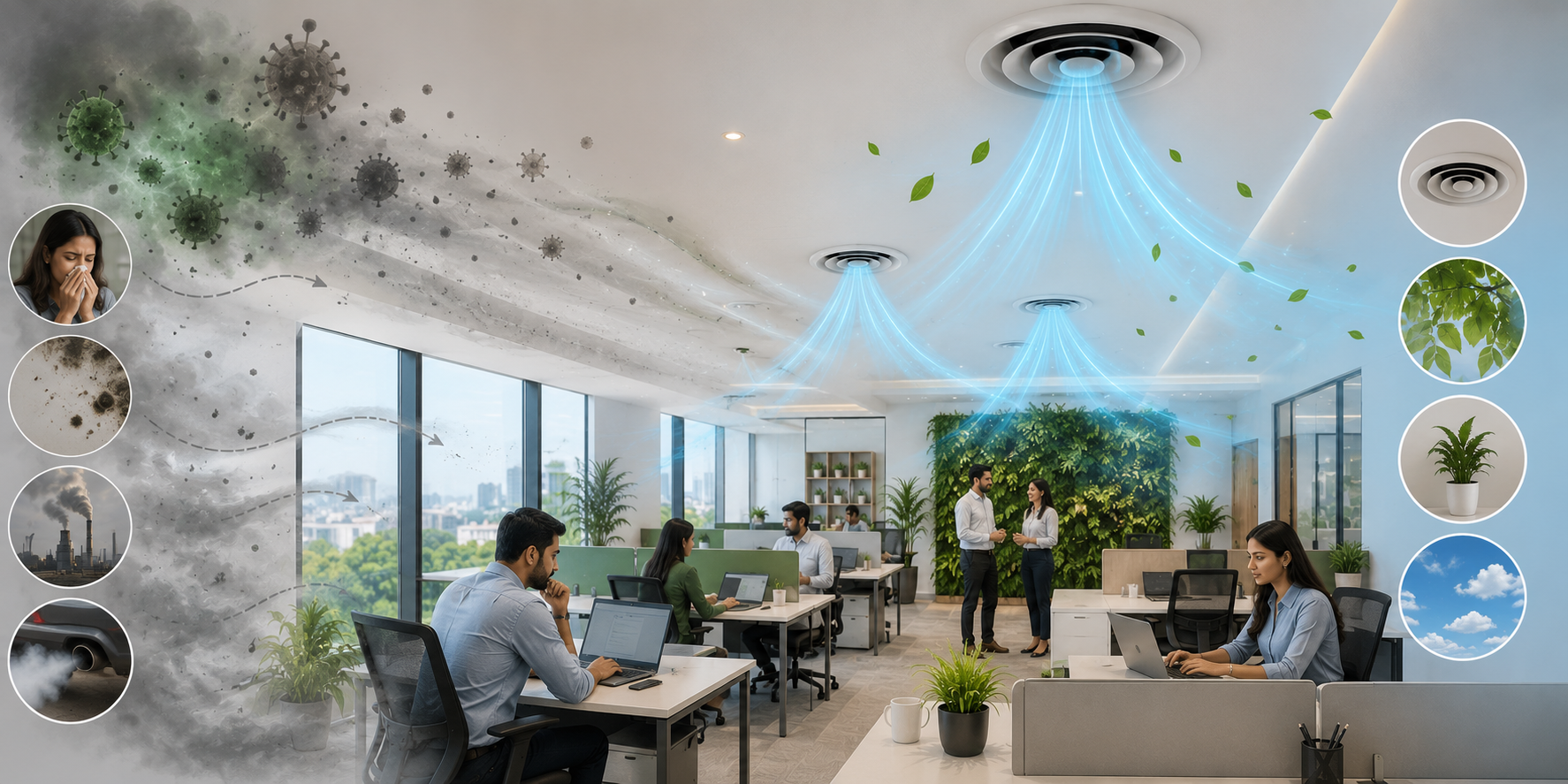
What modern homes need is controlled, filtered ventilation — not random airflow.
Modern Ventilation Solutions That Actually Work
1. Fresh Air Ventilation Systems
These systems continuously bring in filtered outdoor air while removing stale indoor air.
Unlike ACs, they don’t just cool the air — they replace it.
This ensures your home always has a steady supply of oxygen-rich, clean air.
2. Heat Recovery Ventilation (HRV) Systems
HRV systems take things a step further.
They:
- Bring in fresh air
- Remove stale air
- Maintain indoor temperature efficiency
So you get ventilation without losing cooling — perfect for Indian climates where AC usage is high.
3. Integrated Air Filtration
Modern systems also include advanced filters that:
- Trap fine dust particles
- Reduce allergens
- Improve overall air purity
This is especially useful in cities with high pollution levels.
The Shift Toward Healthier Homes
There’s a clear shift happening.
Earlier, luxury in homes meant:
- Bigger spaces
- Better furniture
- Premium finishes
Now, it’s moving toward:
- Cleaner air
- Health-focused design
- Invisible systems that improve daily living
Because what’s the point of a beautiful home if the air inside isn’t healthy?
When Should You Consider a Ventilation System?
It’s worth considering if:
- Your home feels stuffy despite AC
- Dust keeps returning quickly
- Someone in the family has allergies
- You’re building or renovating a home
- You want a long-term health-focused upgrade
The earlier you plan it, the better it integrates into your home design.
Final Thought
Indoor air quality isn’t something you notice immediately.
But once you improve it, the difference is undeniable — better sleep, fewer allergies, and a home that actually feels fresh.
And in a country like India, where dust and pollution are constant — this isn’t a luxury anymore.
It’s becoming essential.
FAQs
1. What is the ideal indoor air quality level for homes?
Ideally, indoor air should have low particulate matter (PM2.5), proper ventilation, and balanced humidity between 30–60%.
2. Do air purifiers solve indoor air quality issues completely?
No. Air purifiers only clean existing air. They don’t bring in fresh oxygen, which is why ventilation systems are more effective long-term.
3. Are ventilation systems suitable for apartments?
Yes, modern compact systems can be installed in apartments, especially during renovation.
4. Will ventilation systems increase electricity bills?
They are designed to be energy-efficient, especially systems with heat recovery, so the impact is minimal.
5. Is indoor air pollution really worse than outdoor pollution?
In many cases, yes — because pollutants get trapped indoors without proper ventilation.