
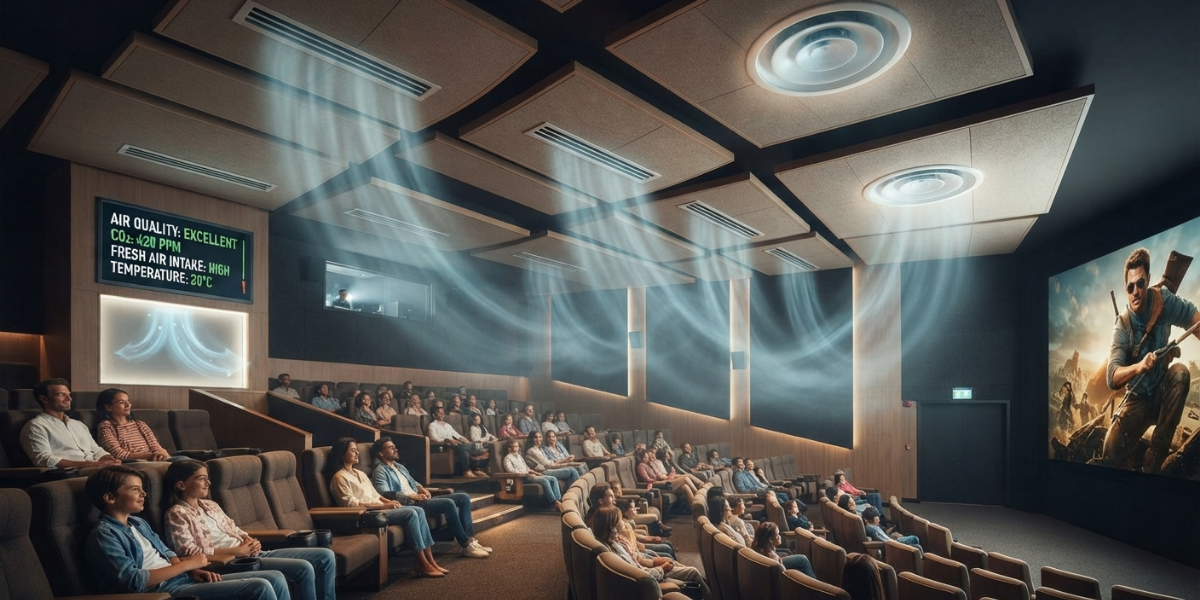
1. Controls CO₂ build-up from packed audiences – A full hall of 200-300+ people in a sealed auditorium pushes CO₂ levels up fast over a 2-3-hour show. Fresh air exchange keeps levels safe, preventing suffocation or discomfort mid film.
2. Eliminates the “stale hall” smell – Body odor, food smells (popcorn, nachos), and recirculated air create the classic stuffy-cinema problem. Continuous fresh air turnover keeps each show feeling like the first show of the day.
3. Reduces airborne disease transmission risk – Densely packed, enclosed seating for hours is high-risk for respiratory infections. Diluting indoor air with fresh outdoor air is one of the most effective passive risk-reduction measures, especially post-COVID audience expectations.
4. Improves audience comfort and dwell time – Comfortable air quality directly affects how long people are willing to sit through long shows, F&B browsing, and lounge time — impacting per-head spend.
5. Protects equipment-heavy projection & AV rooms – Projectors, servers, and AV racks generate heat and need controlled, contaminant-free air. Poor ventilation accelerates dust accumulation and equipment failure in these rooms.
6. Reduces humidity-related issues – Crowded halls generate significant moisture from breathing. Unmanaged humidity affects screen/seating fabric, encourages mold in HVAC ducts, and causes musty odors over time.
7. Lowers HVAC energy penalty with heat recovery (ERV) – Bringing in 100% fresh outdoor air without recovery is energy-expensive in extreme climates. ERV systems recover up to 70-90% of cooling/heating energy from exhaust air — fresh air without blowing up utility bills.
8. Supports compliance with building & fire codes – Cinema halls typically fall under stricter occupancy-based ventilation norms (ASHRAE 62.1 and local fire/building codes) given high occupant density — proper FAS keeps multiplexes audit-ready.
9. Differentiates premium/recliner screens – Premium format screens (4DX, IMAX, recliner lounges) charge a price premium; superior air quality is an invisible but felt part of that “premium experience” justification.
10. Protects brand reputation and reviews – “Hall was stuffy/smelly” is a recurring complaint in multiplex reviews and feedback forms. Consistently fresh air quietly removes a common source of negative word-of-mouth.
Conclusion- For multiplex chains and mall developers, this isn’t an “extra” — it’s a direct lever on three things owners already track: occupancy comfort scores, F&B dwell-time revenue, and energy cost per screen. Fresh air ventilations systems are a revenue/retention tool (not just an HVAC line item).